
Dana Braun · 13 October 2026
Academic Collaborations Spur LED Advances for Cultural Heritage Conservation
University partnerships with heritage organizations and technology firms have produced measurable gains in LED performance tailored to preservation needs, and data from multiple European sites shows reduced energy consumption alongside improved artifact protection. Researchers at institutions across the continent have focused on spectral tuning, thermal management, and control systems that limit ultraviolet and infrared output while maintaining visual fidelity in sensitive environments. These efforts align with broader EU directives on building efficiency that took effect in prior years and continue to shape project specifications into 2026.
Partnership Structures Driving Technical Progress
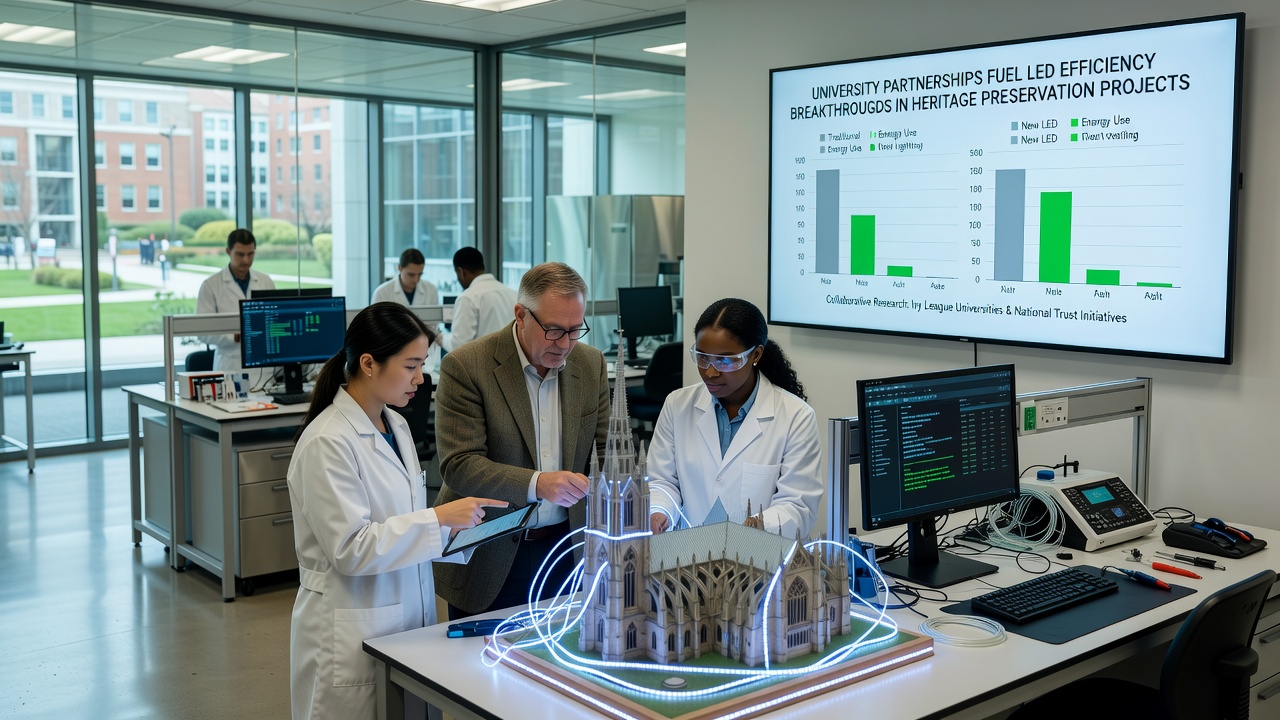
Collaborations typically combine academic laboratories with on-site testing at cathedrals, museums, and archaeological venues, and one program coordinated by a consortium of technical universities in Germany and Italy delivered prototype fixtures that cut power draw by 40 percent compared with earlier LED generations installed in similar locations. Faculty teams work directly with conservators to map light exposure limits for pigments, textiles, and stone surfaces, then iterate fixture designs in controlled chambers before deployment. Funding streams from national research councils and EU framework programs support multi-year cycles that include graduate student involvement, which supplies fresh analytical approaches to color rendering metrics and long-term lumen depreciation tracking.
Observers note that joint publications from these teams frequently appear in journals focused on both lighting engineering and conservation science, and the cross-disciplinary format encourages rapid translation of laboratory findings into field protocols. In several documented cases, student-led sub-projects identified minor heat sink refinements that extended fixture service life beyond manufacturer projections when installed in poorly ventilated historic vaults.
October 2026 Milestones and Reported Outcomes
October 2026 brings scheduled releases of performance data from pilot installations completed earlier in the year, and preliminary summaries circulated among project partners indicate consistent achievement of target illuminance levels with 25 to 35 percent lower annual kilowatt-hour totals than 2023 baselines at comparable heritage venues. Conferences hosted by participating universities will present side-by-side measurements of object color shift after 18 months of exposure under new LED systems versus legacy sources, and these sessions also cover integration of occupancy sensors that further reduce operating hours without compromising visitor experience or security requirements.
Figures released through one academic network show that tunable LED arrays now reach 160 lumens per watt under the specific correlated color temperatures required for manuscript display, whereas comparable fixtures from five years earlier operated closer to 110 lumens per watt at the same settings. Such gains stem from refined phosphor combinations and driver circuitry developed through iterative university-industry testing rounds.
Implementation Examples Across Heritage Sites
Take one project at a Flemish abbey where researchers partnered with site managers to replace mixed halogen and early LED sources, and the resulting installation preserved required lux levels on 15th-century tapestries while cutting cooling loads in adjacent climate-controlled storage rooms. Similar work in a Nordic stave church incorporated wireless dimming tied to natural daylight sensors, which researchers calibrated using long-term monitoring data collected by university meteorology departments.
Additional case studies from Spain and Portugal document the use of modular LED strips embedded in existing architectural recesses, and these designs minimize visual intrusion while allowing conservators to adjust spectra seasonally for different exhibition rotations. Maintenance logs from these sites indicate fewer lamp replacements per year, which reduces both operational costs and the frequency of scaffolding access in protected interiors.
Measurement Standards and Regulatory Alignment
Research groups have contributed to updated measurement protocols that better account for the spectral power distribution effects on cultural materials, and these protocols feed into guidance documents issued by international heritage bodies. Data collected under standardized conditions at university test facilities now supports specification language used in public tenders for lighting upgrades at protected monuments. European Commission reports on cultural heritage energy performance reference such academic contributions when outlining pathways for member states to meet renovation targets through 2030.
According to analyses published by the International Energy Agency, lighting accounts for a notable share of energy use in public historic buildings, and the efficiency curves demonstrated in recent university-led retrofits align with the steeper improvement trajectories projected for solid-state sources over the coming decade. Separate studies from Canadian research centers on cold-climate performance have also informed European fixture designs intended for northern heritage structures.
Future Research Directions
Teams continue to explore integration of machine-learning models that predict maintenance intervals based on real-time sensor feedback from installed fixtures, and early trials suggest these models can flag anomalies before visible degradation occurs. Parallel work examines the potential for recycled materials in LED housings that meet both aesthetic and fire-safety standards required in historic settings. Ongoing grant applications target expanded field trials at additional sites in Eastern Europe where baseline energy data remains sparse.
Conclusion
University partnerships have supplied both the technical refinements and the validation datasets that enable wider adoption of high-efficiency LED systems in heritage preservation contexts, and the pattern of incremental gains documented through 2026 points to continued convergence between conservation priorities and energy performance requirements across the sector.